
Primary vs Secondary Sales: What Every FMCG Distributor Should Know
Most FMCG companies know exactly what they ship to distributors. Very few know what actually reaches the retail shelf. That gap between primary and secondary sales is where margins disappear.
Rishabh
Digital Marketing, Sort String Solutions LLP
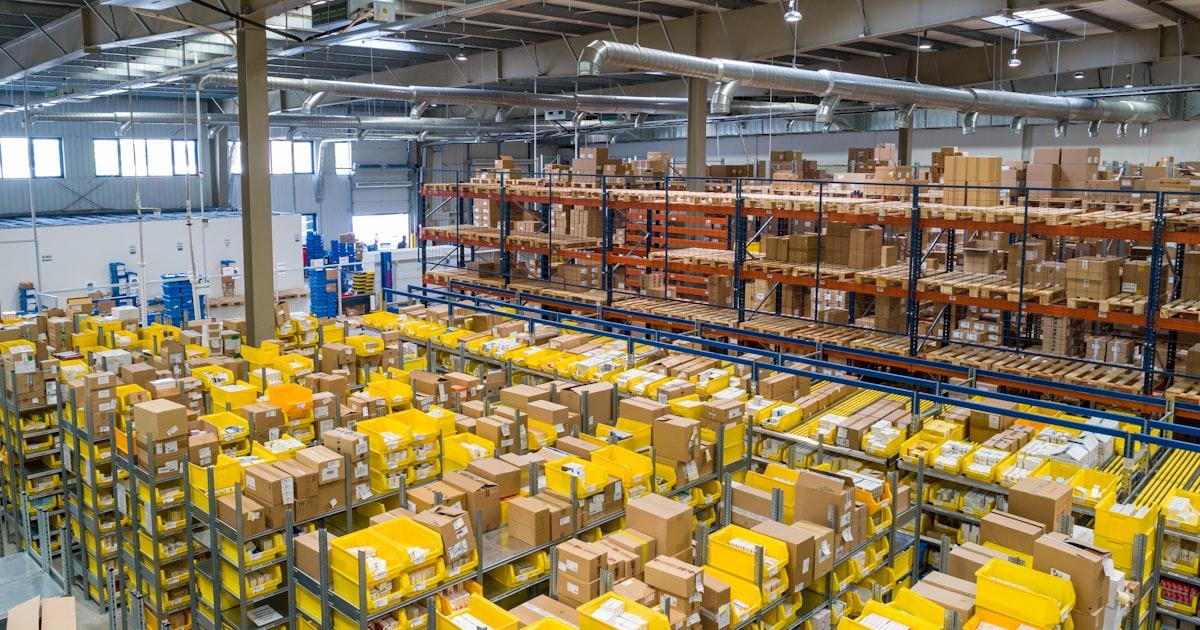
Reading
5 min
If you run an FMCG distribution business in India, you have heard the terms primary sales and secondary sales a thousand times. But the distinction between them — and how tracking both can transform your business — is often misunderstood, even by experienced operations heads. This guide breaks it down simply, and explains why the difference is where most FMCG margins quietly disappear.
What is primary sales?
Primary sales is the first movement of goods in the distribution chain: goods moving from the company or manufacturer to the distributor or C&F agent. When a spice company ships 1,000 cases to its distributor in Lucknow, that is a primary sale. The company books the revenue, the distributor's ledger is debited, and GST is charged.
Most FMCG companies track primary sales well because the data shows up in their Tally or ERP system as distributor invoices. It is clean, it is easy to report on, and it ties directly to financial statements. If you ask any FMCG CFO what their monthly primary sales number is, they can tell you within minutes.
But primary sales alone tells you almost nothing about what is actually selling at the retail level.
What is secondary sales?
Secondary sales is the next movement: goods moving from the distributor to the retailer. When the Lucknow distributor sells 20 cases of spice to a kirana store in Gomti Nagar, that is a secondary sale. And this is the data point that most Indian FMCG companies struggle to capture.
Without secondary sales data, you are flying blind. You know what you shipped to distributors, but you do not know what actually reached the shelf. You do not know which SKUs are moving and which are not. You do not know which territories are strong and which are weak. You do not know whether your distributors are holding excess stock or running dry.
Why the gap matters — a worked example
Let me walk through a real-world scenario. A spice company ships 1,000 cases of its premium turmeric blend to a distributor in Week 1 (primary sales). The distributor sells 600 of those cases to retailers over the month (secondary sales). 400 cases sit unsold in the distributor's warehouse.
In Week 5, the company ships another 1,000 cases to the same distributor. The distributor now has 1,400 cases on hand — 1,000 new cases plus the 400 leftover. The distributor starts demanding credit notes, returns, and extended payment terms because "stock is not moving."
The company responds with aggressive scheme offers to push the distributor to liquidate inventory. The distributor liquidates by dropping prices — which hurts the brand's premium positioning. Retailers who bought at the original price feel cheated. The company cuts shipments in Week 9 to prevent further buildup, leading to out-of-stock situations at retail two weeks later. By the time the next shipment cycle begins, the brand has lost shelf space to a competitor.
This cycle destroys FMCG margins, and it repeats across thousands of distributor-product combinations every month. The company sees its primary sales number and thinks things are fine. The retailer sees empty shelves. Nobody is happy.
How DMS software captures secondary sales
The solution is to capture secondary sales data in real time at the point of sale. A modern distribution management system like SalesPort does this through its field sales app. Every time a field salesperson visits a retailer and books an order, that order is captured in the app with the retailer ID, the SKU, the quantity, the date, and the GPS coordinates of the visit. This is secondary sales data, recorded as it happens.
Back at headquarters, the operations team sees a live dashboard: which SKUs moved from Distributor A to which retailers today, which retailers ordered what volumes, which territories are under-performing their quota, and which distributors are holding excess stock. All before the monthly review meeting — in fact, before lunch the same day.
Across SalesPort's 45 company deployments, the SFA module has captured 17.20 Lakh confirmed field visits and the distribution module has processed 11.44 Lakh dispatches. That level of granular data is what separates companies who know what is happening in their distribution from those who are guessing.
Key secondary sales metrics to track
If you are evaluating a DMS or trying to build a secondary sales tracking process, here are the metrics that matter most:
Secondary sales rate — Volume of goods sold by distributors to retailers, tracked daily by distributor, territory, and SKU.
Fill rate — Percentage of retailer orders that were fulfilled in full. A fill rate below 90% suggests stock-outs or logistics problems.
SKU-wise sell-through — Which specific SKUs are moving quickly versus sitting in distributor warehouses. This is your early-warning system for product performance.
Beat productivity — How many retailers were actually visited and how many placed orders, versus how many were scheduled in the beat plan.
Outlet coverage — Percentage of retailers in the territory that placed at least one order in the period. Low coverage means your distribution reach is narrower than it looks on paper.
Closing the gap
The gap between primary and secondary sales is not a tracking inconvenience — it is the single biggest source of hidden revenue leakage in Indian FMCG distribution. Companies that close this gap typically see three things within 90 days: better demand forecasting (because they see real sell-through), reduced distributor stock build-up (because over-shipping becomes visible), and better field force accountability (because secondary sales show exactly who is performing).
Want to see how SalesPort tracks both primary and secondary sales across your distribution network? Schedule a walkthrough.
Frequently asked
Quick answers
Why does the gap between primary and secondary sales matter?
How do you actually capture secondary sales?
What metrics signal a primary-vs-secondary gap?
How quickly can companies start tracking secondary sales digitally?
Written by
Rishabh
Digital Marketing, Sort String Solutions LLP
See it in action
Run this playbook on your own data.
Book a 30-minute walkthrough — we'll demo the exact module discussed in this article on a real dairy or FMCG dataset.
Schedule a walkthroughGet a 30-min walkthrough on your data.
No deck, no fluff. Just the modules from this article running live.
Keep reading
More from the field
 FMCG
FMCGMulti-Warehouse Inventory for FMCG: Branch-Level GRN, MRN & Real-Time Stock
Running stock across plants, depots, and distributor godowns on disconnected spreadsheets means you never know true stock position. Here's how multi-warehouse inventory with GRN, MRN, and real-time visibility fixes it.
FMCGOutlet Master Cleanup: The Dedup + Geo-Tagging Playbook for FMCG India
A dirty outlet master quietly corrupts every coverage, beat, and secondary-sales number you have. Here's the practical playbook to dedup and geo-tag your outlet base — the unglamorous foundation of good distribution data.
FMCGCFA → Super Stockist → Distributor: Building a Clean 3-Tier Reporting Hierarchy
Multi-tier distribution gives reach but hides the truth — you can't tell real secondary sales from stock pushed down a tier. Here's how to model the CFA → super stockist → distributor → retailer hierarchy so it's actually measurable.