Services · Mobile Apps

Flutter Mobile App Development — Offline-First, Hardware-Aware, Production-Hardened

132+ production Flutter apps serving 2.3 Lakh daily users across India and Nepal. The offline sync logic is already written — we deploy it for you.

132+
Production Flutter apps shipped
2.3 Lakh
Daily active mobile users
1,797
VLCs running our app offline

What we deliver

The specific work we ship

Offline-first field apps

Apps that work fully offline — order capture, attendance, GPS logs, hardware-device integration — and sync opportunistically. The sync engine that handles 11+ days of offline operation in production is a library we deploy with every app, not a feature we re-invent.

Hardware integration

Milk analysers (Lactoscan, EkomilkScan, Bulgarian-brand DSC machines), Bluetooth printers, barcode scanners, EMV/UPI POS terminals, weighing scales. We have integrated all of these in production — the hardware-comms layer is hardened code.

GPS-verified workflows

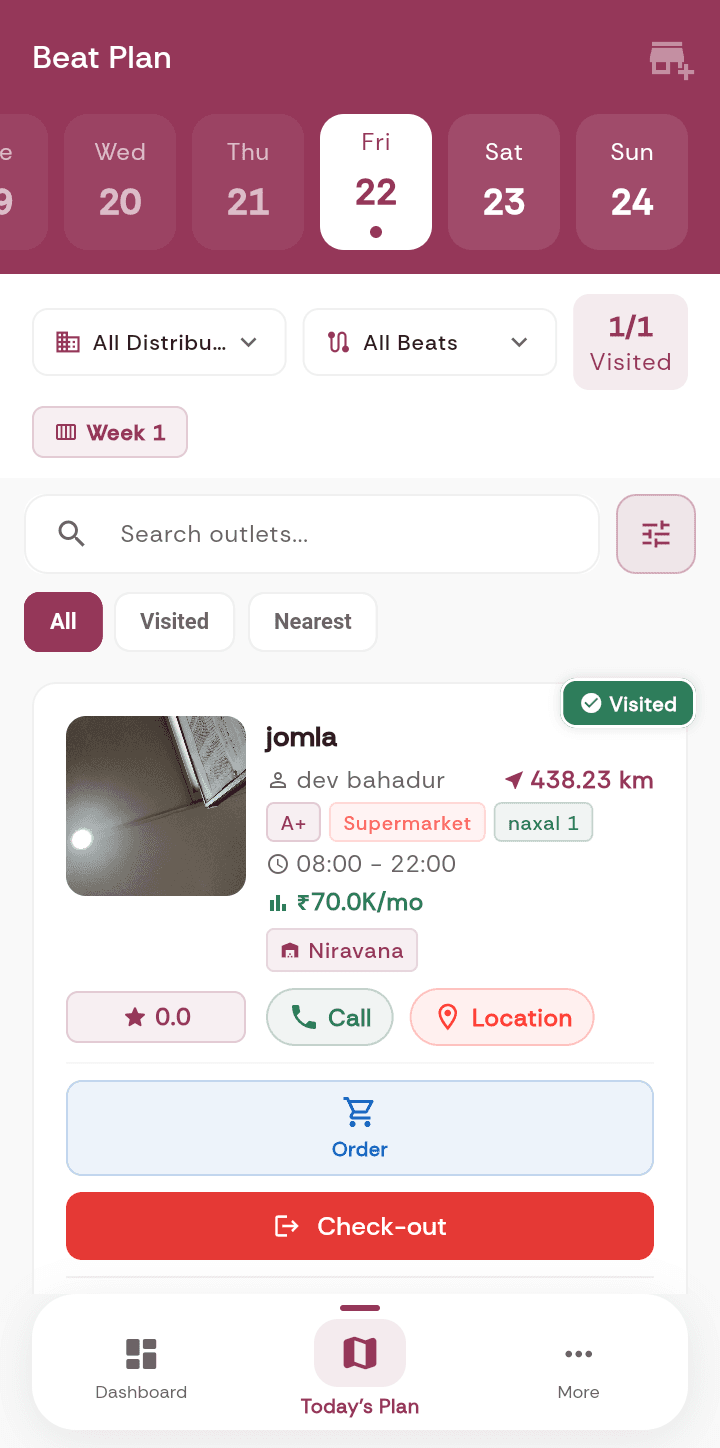
Geo-fenced check-ins, beat-plan compliance, route tracking with offline waypoint logging, geo-stamped photo uploads. We have logged 21.64 Crore GPS data points in production — the GPS battery-drain optimisation is solved.

Native iOS + Android from one codebase

Flutter delivers true native performance and 100% feature parity between platforms. One codebase, one team, half the maintenance cost over a 3-year horizon compared to building separate native apps.

Enterprise-grade app distribution

Play Store + App Store publication including ASO setup, MDM/EMM distribution for enterprise rollouts, version-cohort rollback support, in-app A/B testing, OTA hotfix capability for non-store bug fixes.

Engagement model & pricing

Most mobile-app engagements run 14-22 weeks for a fully-loaded production app. Fixed-scope from Rs 12 Lakh; dedicated mobile pod from Rs 4.5 Lakh per month. Includes Play Store + App Store publication, MDM-compatible build artefacts, and source code handover. Hardware-device integrations scoped separately based on protocol availability.

Why us

Proof, not promises

  • 1

    132+ production Flutter apps shipped across India and Nepal — we are not learning Flutter on your project.

  • 2

    Offline-first is the default. The sync engine survives 11-day offline windows in our worst-case production deployments. No data loss, no manual reconciliation.

  • 3

    Hardware integration is in our muscle memory. Milk analysers, Bluetooth printers, barcode scanners, weighing scales — we have shipped all of these in production.

  • 4

    GPS battery optimisation is solved. Our apps use 8-12% battery over a 10-hour field-rep workday, not 40%. Real device testing, not emulator-only verification.

  • 5

    MDM-ready from day one. Enterprise clients distribute via Microsoft Intune, MobileIron, or VMware Workspace ONE — we ship signed and MDM-compatible build artefacts as standard.

How we work

A 4-step delivery process

User journey & device strategy

Two-week structured discovery — primary user journeys, offline behaviour requirements, target devices (entry-level Android, mid-tier, iOS), hardware integration needs. Output: clickable Figma prototype and technical scope.

Architecture & UI design

State management decisions, sync architecture, hardware-protocol mapping, OEM-specific edge cases identified. UI design phase runs in parallel — your branded design system delivered before code starts.

Sprint development with device-lab QA

Two-week sprints with builds tested on a 12-device matrix (covering 4 OEMs × 3 OS versions). Crash analytics from sprint 3 onwards. UAT environment with TestFlight + internal Play distribution.

Store launch & MDM-ready handover

Play Store + App Store submission with ASO content, screenshots, and store-listing copy. MDM-compatible APK + IPA build artefacts. Crash analytics dashboard, in-app feedback channel, 30-day post-launch war room.

Why Flutter (and when not to use it)

The mobile-development conversation in India typically starts with "should we build native Android, native iOS, React Native, or Flutter?" Our answer for almost every business app: Flutter. Here's the honest reasoning.

Flutter delivers near-native performance. The framework compiles to native ARM machine code on iOS and Android — no JavaScript bridge, no interpretation layer. Animation, scrolling, and complex layouts behave indistinguishably from native code. We have benchmarked our Flutter apps against equivalent native builds on entry-level Android (4 GB RAM, Snapdragon 4-series) — frame-time variance is under 5% in worst case.

Single codebase means half the maintenance cost. Over a 3-year horizon, a Flutter app is roughly 40-50% cheaper to maintain than the equivalent two native codebases. One sprint of feature work covers both platforms. One bug fix lands in both stores. One QA cycle catches both. The compounding benefit is enormous for any business that ships features quarterly.

Where we still recommend native: Apps where 80%+ of value is in deep platform integration — ARKit/ARCore experiences, complex audio processing, hardcore gaming, or apps that need bleeding-edge OS features within weeks of OS release. For the kind of business apps Indian companies actually need (field operations, B2B portals, customer-facing apps, retailer apps), Flutter is the right answer in 95% of cases.

What "production-hardened Flutter" actually means

A first-year Flutter developer can build a working app. A production-hardened Flutter team has shipped the same architectural patterns 100+ times and learned where the actual operational pain lives. The difference is invisible in a demo and devastating in production.

Offline-first sync. This is the single hardest engineering problem in field-operations mobile development. Our sync engine handles: conflict resolution when two devices captured changes for the same entity offline, partial-sync recovery when the upload connection drops mid-stream, retry-with-backoff for transient server errors, idempotent server-side handling so duplicate uploads from app retries don't create duplicate records, and gracefully-degraded behaviour when the device has been offline so long that the data model has been server-updated. We have running deployments where field staff have been offline for 11 days and synced cleanly when connectivity returned.

Hardware integration. Milk analysers from at least four manufacturers (Lactoscan SL, EkomilkScan, Astoria, DSC). Bluetooth thermal printers across Bixolon, Zebra, Epson, and the Chinese OEMs that dominate the low-cost market. Barcode scanners (Honeywell, Datalogic, Zebra) over Bluetooth and USB-OTG. Weighing scales over RS-232. The hardware-comms layer for each of these is non-trivial; we maintain a library that abstracts the protocol differences so application code stays clean.

GPS battery optimisation. Naive GPS implementations drain a phone battery in 4-6 hours of polling. We have spent years optimising the polling cadence + accuracy fallback + Doze-mode handling on each major Android version. Our apps use 8-12% battery over a 10-hour field workday. This is invisible in a demo and the single most-complained-about issue when teams build their own.

Crash resilience. Production apps crash. Customer Service apps crash silently and corrupt local data. Our Flutter apps integrate Sentry for crash analytics from sprint 3 onwards — every crash is captured with stack trace, device info, last 50 user actions, and the local data state at crash time. We have caught and patched dozens of edge cases through this telemetry that we would never have caught in QA.

The 12-device test matrix we run

Every production Flutter app we ship is tested against this matrix before store submission:

  • Android low-end: Redmi 9A, Samsung Galaxy M04, Realme Narzo 50A
  • Android mid-tier: Redmi Note 12, Samsung Galaxy A24, Motorola G54
  • Android high-end: Pixel 8, Samsung S24, OnePlus 12
  • iOS: iPhone SE (3rd gen), iPhone 13, iPhone 15

Three OS versions per platform. The matrix catches OEM-specific edge cases (Samsung's notification handling, Xiaomi's aggressive background-process killing, MIUI's location-permission quirks) that emulator-only testing misses.

App publication and enterprise distribution

Play Store and App Store submission is included in our standard fixed-scope project — including ASO content (title, short description, long description, screenshots optimised for store CTR), store-listing copy in English and (optionally) Hindi for the local audience, and the developer-account setup if you don't already have one. Initial review submission typically clears within 7-14 days; we monitor and respond to reviewer feedback.

For enterprise rollouts, we ship MDM-compatible build artefacts that work with Microsoft Intune, MobileIron, VMware Workspace ONE, and Hexnode. Configurations are externalised so a single APK can deploy to multiple business units with different backend endpoints. We have configured this for clients distributing apps to 5,000+ devices across regions.

What we charge

Fixed-scope Flutter app projects range from Rs 12 Lakh (a single user journey, modest hardware integration, 12-week timeline) to Rs 65 Lakh (multi-user-role app with deep offline sync, multiple hardware integrations, complex GPS workflows, 22-week timeline). The mid-range — a fully-loaded field force app with offline-first sync, GPS verification, basic hardware integration, store launch, and enterprise distribution — typically lands at Rs 22-35 Lakh.

Dedicated mobile pod retainers (1 mobile lead + 1 mid-level Flutter engineer + part-time UI design and QA) start at Rs 4.5 Lakh per month, 3-month minimum commitment. Useful when your roadmap is evolving rather than fixed-scope.

Schedule a scoping call — we'll give you a tight scope estimate within one conversation, with no follow-up "we'll get back to you" theatrics.

Frequently Asked Questions

Quick answers

Why Flutter instead of React Native or native Android + iOS?

Flutter compiles to native ARM machine code (no JS bridge), delivers near-native performance, and lets one team ship both platforms from one codebase. We have shipped 132+ Flutter apps in production — the offline-first sync engine, GPS battery optimisation, and hardware integration libraries are all hardened code we deploy with every project. For 95% of business apps, Flutter wins on quality, cost, and time-to-market.

Can the app work fully offline?

Yes — and offline-first is our default architecture, not an optional feature. Our sync engine handles 11+ day offline windows in production deployments, with conflict resolution, partial-sync recovery, and idempotent server-side processing so duplicate uploads from retries never create duplicate records. Field staff in rural India and Nepal run our apps without connectivity all day, every day.

Do you handle Play Store / App Store submission?

Yes. Store submission is included in our fixed-scope projects — including ASO content (title, description, screenshots optimised for CTR), developer account setup if needed, reviewer response, and update releases for the first 30 days. Most apps clear initial review within 7-14 days.

What hardware can the app integrate with?

We have shipped production integrations with milk analysers (Lactoscan, EkomilkScan, Astoria, DSC), Bluetooth thermal printers (Bixolon, Zebra, Epson, and low-cost Chinese OEMs), barcode scanners (Honeywell, Datalogic, Zebra), weighing scales (over RS-232 or Bluetooth), EMV/UPI POS terminals, and Aadhaar fingerprint scanners. New hardware integrations are scoped based on protocol availability — most modern hardware ships with documented Bluetooth or serial protocols we can adapt.

How long does a typical mobile app project take?

A fully-loaded production app — offline-first sync, GPS verification, basic hardware integration, store launch — typically takes 14-22 weeks end-to-end. Simpler apps (single user role, no hardware) ship in 10-14 weeks. Complex multi-role apps with deep integrations extend to 22-28 weeks. We provide a tight estimate after the 1-2 week discovery sprint.

Can we maintain the app ourselves after launch?

Yes. Source code, architecture documentation, runbooks, build instructions, and deployment procedures are part of every handover. We provide an optional AMC for maintenance, version upgrades, and minor enhancements — typically Rs 30,000-1,00,000 per month depending on app complexity — but you can transition to in-house maintenance whenever you choose. No vendor lock-in.

Ready to scope your mobile app development engagement?

Schedule a 30-minute consultation. We will assess fit, propose a tight scope, and quote transparently on the call. No follow-up “we will get back to you” theatrics.

Schedule a Consultation